

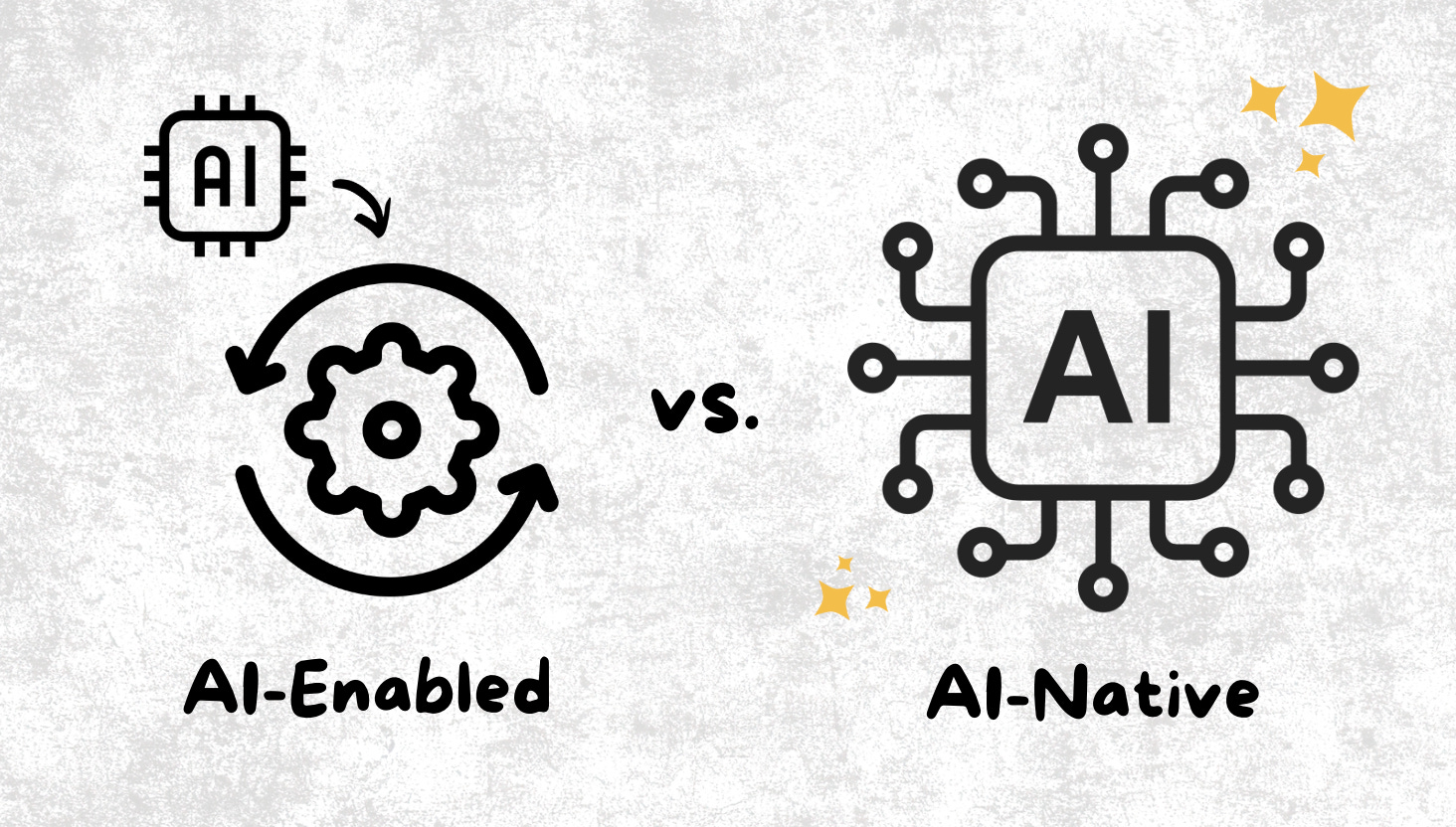
Most Engineers Misunderstand What “AI-Native” Means
Most engineers think “AI-native” means using Copilot to write code faster. Or adding a chatbot to their Slack channels.
Honestly, that’s AI-Enabled, not AI-Native.
In 2025, Amazon launched AI-DLC (AI-Driven Development Lifecycle). They didn’t add AI features to their old SDLC tools. They replaced the whole thing.
There’s a difference between using AI and designing for AI. The engineers who understand the second are the ones with the clearest path to senior and leadership roles in 2026.
What AI-Native Actually Means
AI-native means building systems, workflows, and architectures that assume AI exists from the start.
Here’s the difference:
AI-Enabled:
Adding AI features to existing workflows (a chatbot on Slack)
Using AI tools to speed up old processes (e.g. speeding up coding).
AI-Native:
Redesigning the entire process around AI capabilities.
Building workflows that wouldn’t make sense without AI.
It’s the difference between “we use AI tools” and “we designed this process assuming AI exists.”
Example 1: Amazon’s AI-DLC
Amazon replaced their traditional SDLC tools with a system designed for AI-first development, including ticketing, planning, code review, testing, deployment pipelines.
The key shift:
In the existing SLDC workflow, humans create tasks, write code, review code, and deploy. Most engineering teams add AI to support and improve each step.
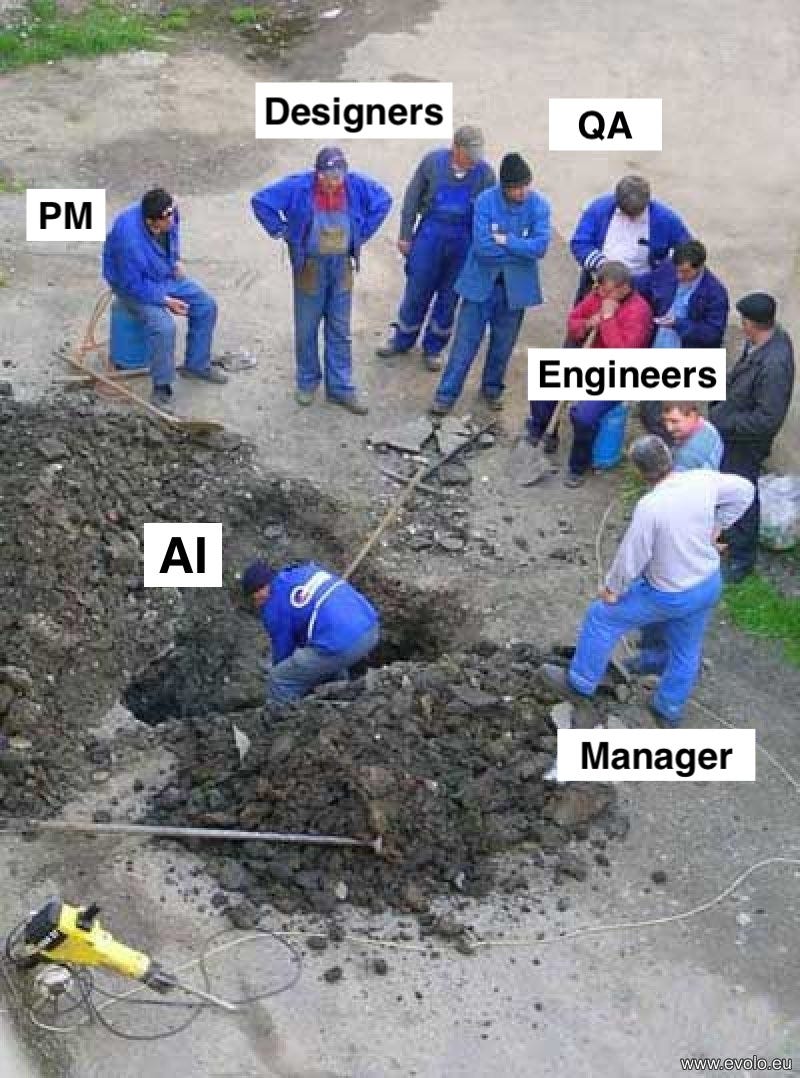
On the other hand, in AI-DLC, AI drafts implementations at every stage: PRD, code, tests, deployment config. Humans review, approve, and provide judgment. You can think of AI as the “worker” in that famous meme below, and humans are those who observe.
The key difference:
Regular SDLC: PRD takes a day. Tech design takes two days. Implementation takes a week. Each step waits for PMs, designers, and engineers working on their own schedules.
AI-DLC: PRD and tech design alignment happens in one hour, in the same room. AI spots inconsistencies and suggests improvements in real-time. AI generates the initial implementation. Developers spend two days reviewing it, handling edge cases, and making architectural decisions, rather than writing boilerplate from scratch. Code review submission drops from 5+ days to 2.
Time use shifts from creating to polishing. It dramatically reduces the project lead time.
And yes, AI-DLC has its own challenges too, but that's a topic for another day 😄
Example 2: Incident Response (This Works in My Company)
Our organization redesigned our incident response process around AI.
In our old workflow:
Alert fires at 2 AM → engineer wakes up 😫
The engineer manually checks logs, dashboards, recent deployments → spend 20-30 minutes determining if it’s real or a false alarm
Finally, they roll back, escalate, or decide that it’s a false alarm and go back to sleep.
In the new workflow:
Alert fires → AI checks logs, dashboards, and recent changes 🤖
AI determines false alarm or real incident → If false alarm: engineer sleeps through it. If real: engineer wakes up
The engineer starts their investigation with a pre-written investigation report with possible root causes. It saves them that 20-30 minutes from the investigation.
Result: Our team’s false-alarm wake-ups dropped significantly. MTTR for real incidents dropped as well, because engineers started with context instead of starting from scratch.
Better productivity. Better sleep. Better incident handling.
Why This Matters for Your Career
Notice the pattern in both examples: we didn’t add AI tools to existing processes. We redesigned the processes around AI. That creates a gap between engineers who think AI-native vs those who simply add AI to their existing processes.
The Hiring Shift
Companies have been aggressively promoting AI use, including Meta, for example, reportedly ranks teams by token consumption (whether that’s a good practice is a different conversation 😅)
That means companies are already hiring AI-native thinking engineers, but they don’t know how to ask for it yet. Job descriptions only say “good at leveraging AI tools” when what companies actually want is engineers who can think and operate in an AI-native environment.
How AI-native Engineers Think Differently
Most engineers can use AI tools, but not all of them can make good use of it without breaking the production environment.
My observation is that AI-native engineers answer different questions than regular engineers:
How do you do code review more effectively? AI can catch syntax errors effectively. What should be the focus for humans?
How do you structure your codebase when refactoring costs change? If AI can rewrite a module in 10 minutes, does that change your architecture decisions?
How do you avoid relying too much on AI? We let AI provide ideas and implementations, but how do we avoid giving up our agency and individual thoughts?
How do you avoid AI decision fatigue? When AI can generate 10 variations in 10 minutes, how do you know when to stop iterating?
The Takeaway
The pattern in both examples is the same: stop adding AI to old processes. Redesign the process around AI from the start. The gap between “uses AI tools” and “makes AI-native decisions” is where the mindset makes a difference. To get started, you need to start asking different questions about your current work:
What would our code review process look like if we designed it today?
What would the incident response process look like?
What would sprint planning look like?
All assuming that AI is the driver of these tasks.
Your AI-native thinking starts here.
Last Words
Our engineering teams have been working on multiple AI initiatives. Some work well, and some not so much. Over the next few weeks, I’m breaking down the specific AI decisions I’m making as an Engineering Manager. You don’t want to miss it if you are forming your AI-native mindset.
Subscribe to get them in your inbox.
Already dealing with AI-native decisions at work? Hit reply and tell me what you’re working on. I read every response :)
See you in the next post.
Adler from Tokyo Tech Lead