

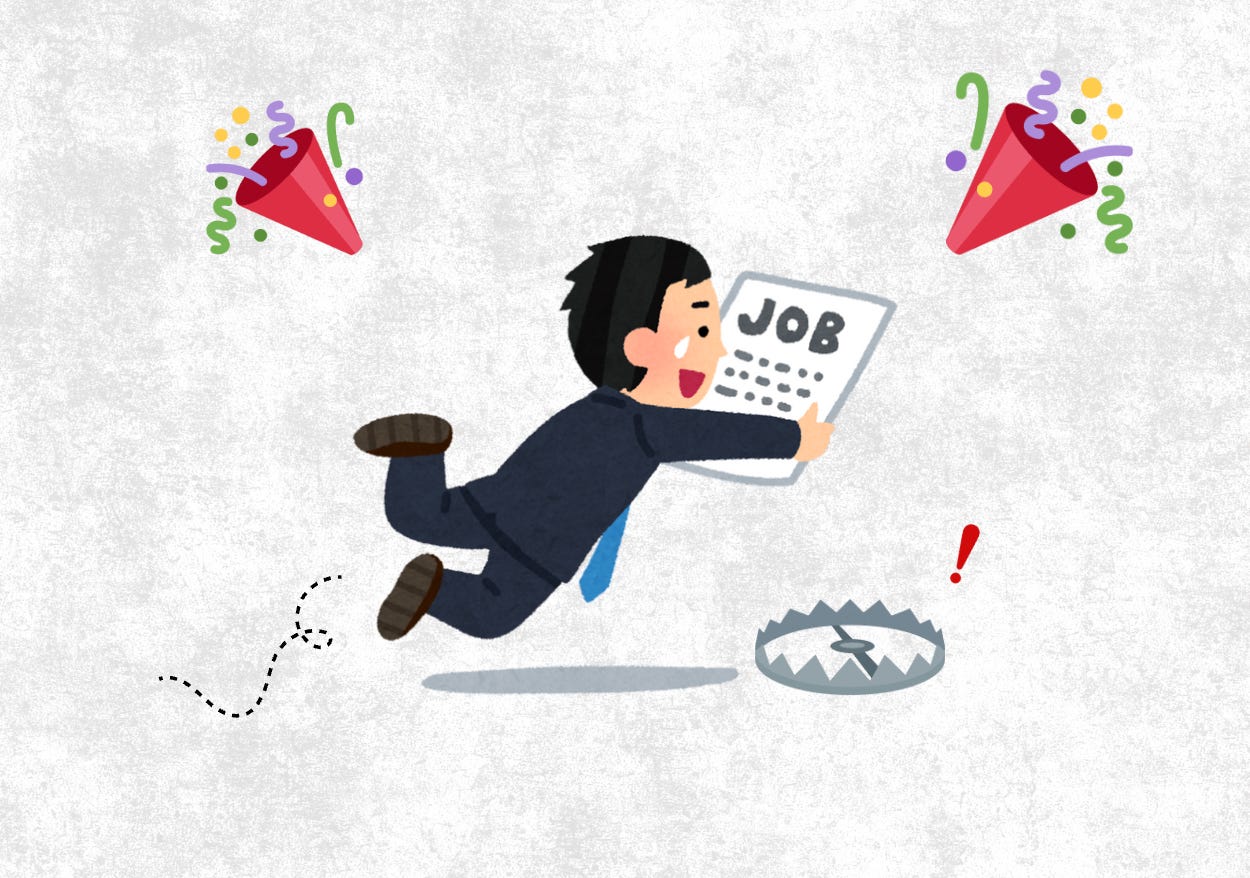
Congratulations! You just got a new offer 🎉
Now you are ready for a higher salary, better title, maybe a more ideal engineering culture.You’re finally “moving forward” again after feeling stuck.
Nice. Good for you 👍
But here’s the thing: the excitement can blur your judgment. You start imagining what life could be like at the new company. You picture yourself in that role, working with that team, solving those problems.
But before you accept that offer, you need to step back. You need to understand what you’re actually trading, not just what you’re gaining.
Every decision is a tradeoff, not “better offer = better life”.
Risks of Changing Jobs Nowadays
Behind your shiny offer, here are some risks that you cannot ignore.
The Current Market is Less Forgiving
Since AI tools are now the default, companies expect more from new hires.
⚠️ Less tolerance for learning through mistakes. When budgets are tight, mistakes feel more expensive. Shipping a production-breaking bug in your first month can leave a stronger negative impression.
⚠️ Faster ramp-up is expected by default. Instead of given six months, you’re expected to contribute meaningfully within weeks. Your manager needs earlier results to demonstrate productivity.
New Hires are More Exposed to Layoffs
We’re only one month into 2026 and the number of massive layoffs has not slowed down.
When priorities change, newcomers are more exposed. Layoffs and re-orgs happen. When they do, the people who joined recently are the first ones leadership considers cutting.
You don’t have the relationships or the track record to protect you yet.
The Grass Looks Greener Until You Get There
Even before the AI era, this problem existed: Every company sells you a dream during the interview process.
They talk about their culture, their tech stack, and their ambitious roadmap. They highlight the interesting problems you’ll solve. They show you the best version of themselves.
But you don’t know what you’re actually signing up for until you’re inside.
Their “modern tech stack” could be a half-migrated mess. That “collaborative culture” might mean endless bureaucracy.
It’s only a different set of problems. Sometimes worse.
Staying Has Its Advantage
Many people don’t think staying has any advantage. They have had enough, and they want to move on.
That’s understandable. But staying can be the smarter move if you have a clear career plan.
Trust and Credibility Give You More Options
At your current company, people know what you’re capable of.
Your manager has seen you handle incidents. Your teammates have reviewed your code. Stakeholders have worked with you on projects. You’ve built a reputation.
That trust opens doors to multiple possibilities.
👉 You may be able to lead a major architecture change. You know the system and workflow deeply. You have the connection who can support your decisions.
👉 You may also have options to move to management. You’ve mentored teammates and influenced technical direction. That track record makes the transition possible.
At a new company, you’re guessing. You don’t know the system. You don’t know whose opinion carries weight. The learning curve slows you down.
Comfort Can Be an Asset
Here’s something most people get wrong: comfort isn’t always bad.
Yes, being too comfortable can make you stagnant. But it can also free up mental energy for other things.
When your day-to-day work feels manageable, you have space to explore side projects. You can invest in your blog, your coaching business, or other long-term investments. You can pursue interests that might not pay off immediately but could become opportunities later.
I’ve seen engineers stay at comfortable jobs while building businesses on the side. Eventually, those side projects turn into a meaningful income stream. That only worked because they weren’t burning out at their 9-to-5.
So How Should You Choose?
Most engineers never think about this when they get an offer: What are you actually optimizing for?
Not just right now, but in the next 2-3 years.
Because the answer changes everything.
Different Goals Need Different Strategies
Here are some examples of what you should consider.
If you’re optimizing for learning new technologies, switching might make sense. A new company means new problems, new tech stacks, new challenges.
If you’re optimizing for career advancement into management, staying might be smarter. You already have the relationships and trust needed to move up.
There’s no universal right answer. It depends on where you are and where you want to go (and you might want to avoid asking your friends).
If You Need Clarity
If you’re sitting on an offer and feeling torn between a comfortable role and a new opportunity, that’s exactly the kind of decision I help people think through.
In career decision consulting, I won’t tell you what to choose, but help you clarify the tradeoffs and pressure-test assumptions.
Instead of making a “brave” or “safe” choice, you’ll make a decision you won’t second-guess six months later.
That’s it for today.
If this resonated, feel free to like or share it.
I’ll see you in the next post.
Adler from Tokyo Tech Lead